
The underlying mechanics of institutional Price Action
“Price Action” has become a catch-all term. For most people it means recognizing three candles. For an institutional player it's the opposite: a read of where liquidity sits, and who has an interest in taking it.
The market is an auction, not a chart
Before it's a curve, the market is a continuous auction mechanism: buy and sell orders meeting each other. A price rises not because a pattern is “bullish,” but because demand absorbs the supply available at that level. As long as you think in patterns rather than flows, you describe the past instead of anticipating the imbalance.
Liquidity: the fuel of every move
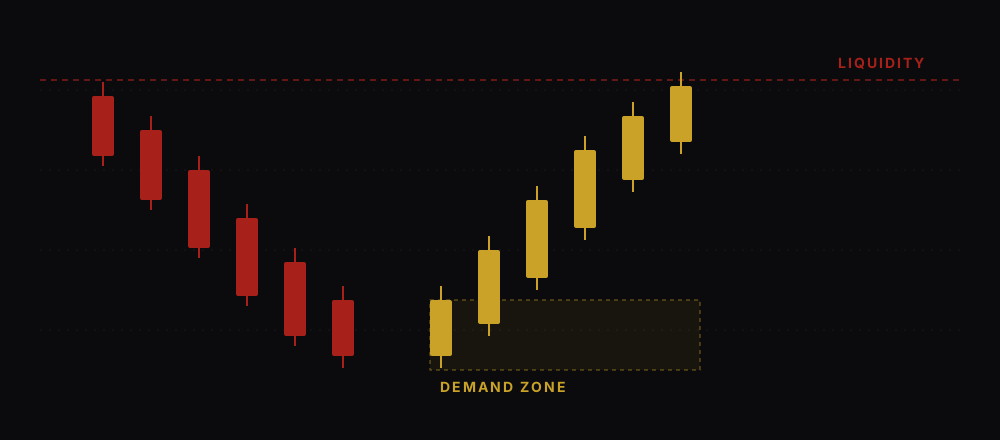
Large participants cannot execute a massive position all at once without slipping price against themselves. They need counterparty — that is, liquidity. And liquidity concentrates exactly where retail traders mechanically place their stops: above obvious highs, below obvious lows. That's why price so often comes to “collect” those levels before reversing. It isn't a curse; it's execution engineering.
"Price doesn't trap you. It simply goes where the orders institutions need to fill are sitting."
Imbalance, return, continuation
A violent impulse leaves behind an imbalance zone: a price range crossed too fast for every order to be filled. The market has a statistical tendency to return and fill that void before resuming its direction. Identifying these zones, waiting for the return, and acting only once the imbalance is confirmed — that's a spatial read that depends on no lagging indicator.
From theory to execution
This mechanic is worthless without an execution framework. Knowing where liquidity sits is useless if you enter with no clear invalidation or risk management. Method and discipline are two sides of the same coin: one tells you where to look, the other tells you when to act and how much to risk.
Ready to impose your rigor on the market?
Join the KILLEURUSD ecosystem and deploy asymmetric management of your portfolio.
Join the program